Roof Coatings & Waterproofing
Your Roof Might Not Need Replacing. It Might Just Need Sealing.
Thousands of Riverside homeowners and business owners replace roofs that could have been saved with a coating. When the membrane is still structurally sound but starting to show wear, cracking, or minor leak points, a professional coating application seals the entire surface, reflects solar heat, and adds 10 to 15 years of service life at a fraction of the cost of a full tear-off.
Gary inspects every roof before recommending a coating. If the substrate is too far gone, rotten, or structurally compromised, he will tell you that a coating is not the answer. That honesty is why homeowners trust Thompson Roofing over coating-only companies that sell coatings on everything, regardless of whether the underlying roof can support it.
Elastomeric Coatings
Elastomeric roof coatings are thick, flexible membranes that expand and contract with temperature changes without cracking. They are the most common choice for flat and low-slope roofs in Riverside because they bridge small cracks, seal seams, and reflect significant amounts of solar heat. Applied in multiple coats with polyester reinforcement at seams, a quality elastomeric system creates a seamless waterproof barrier across the entire roof surface.
Silicone Coatings
Silicone coatings excel where ponding water is a concern. Unlike acrylic and elastomeric products that can re-emulsify when submerged for extended periods, silicone remains fully waterproof even under standing water. This makes silicone the preferred choice for flat commercial roofs with drainage issues, mechanical equipment pads, and areas where water pools after rain. Silicone also maintains excellent UV resistance without chalking or eroding over time.
Acrylic Coatings
Acrylic roof coatings are a cost-effective option for sloped roofs in good condition. They provide excellent reflectivity for cool roof compliance, are available in a range of colors, and apply cleanly over metal, modified bitumen, and single-ply membranes. Acrylics are best suited for roofs with positive drainage because they perform less reliably in ponding conditions than silicone alternatives.
Cool Roof & Reflective Benefits
Riverside summers push roof surface temperatures well above 160 degrees on dark membranes. A white reflective coating can reduce that surface temperature dramatically, which directly reduces heat transfer into the building. For commercial properties, cool roof coatings can meet Title 24 requirements and may qualify for utility rebates. For residential properties, the reduction in attic heat translates to lower cooling costs and less strain on your HVAC system.
Flat Roof Waterproofing
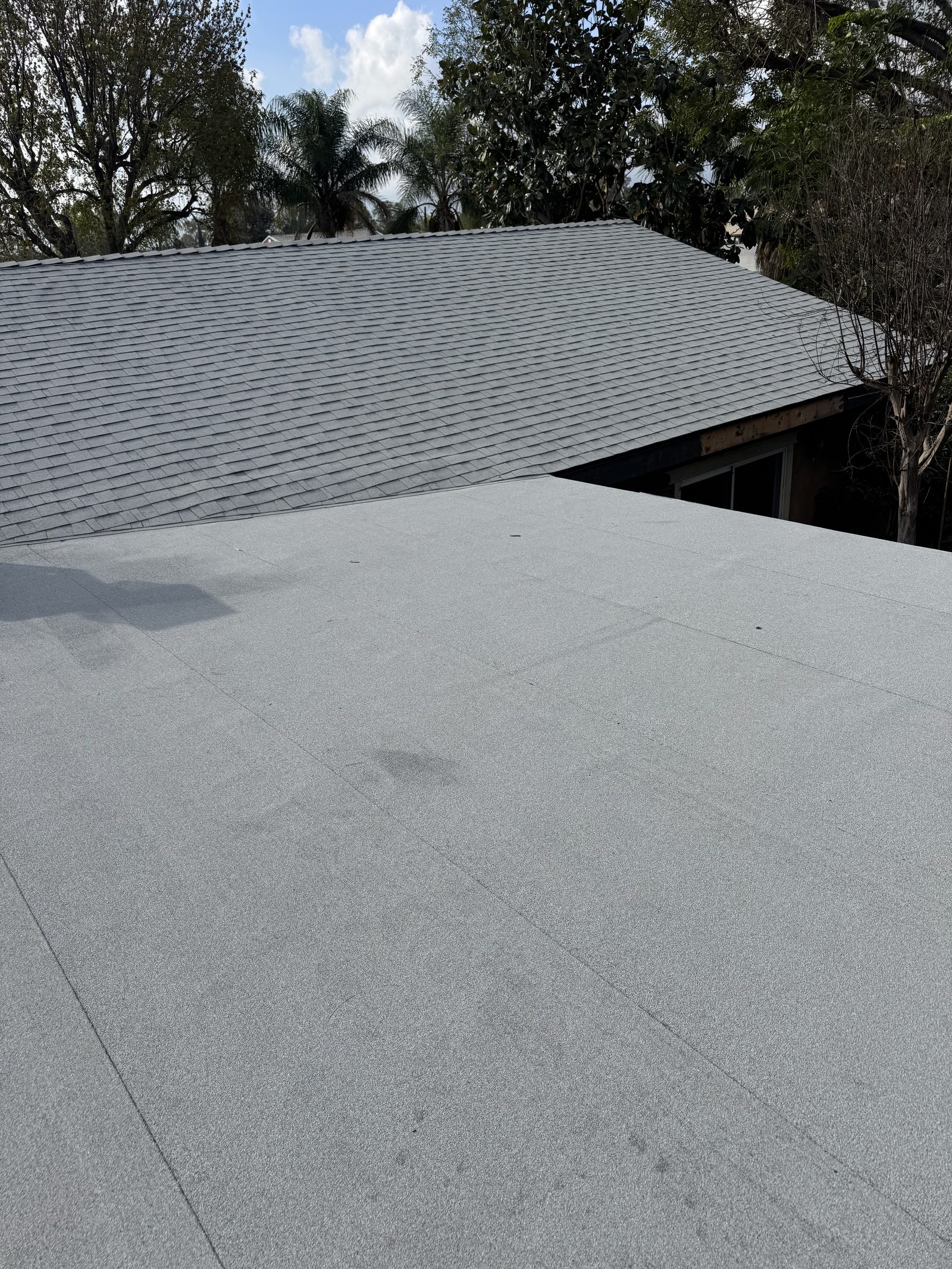
Flat and low-slope roofs are especially vulnerable to leaks because water does not shed quickly. Coating systems designed for flat roofs incorporate reinforcement fabric at all seams, flashings, and penetrations to create a monolithic waterproof membrane. Gary builds up additional material at vulnerable points like drains, scuppers, and HVAC curbs where most flat roof leaks originate.